

Planning a birthday party for your child sounds like pure fun until you’re staring at a blank notepad three weeks out, unsure whether to book a venue or tackle the backyard, wondering how many juice boxes are actually enough, and second-guessing every decoration choice. The good news is that a well-organized approach transforms that overwhelm into excitement. This guide walks you through every stage of the process, from choosing a theme to picking the right favors, so you can spend less time stressing and more time celebrating alongside your child.
Table of Contents
- Choosing a theme and venue: Setting the foundation
- Party supplies and decorations: Gathering essentials
- Menu planning: Kid-friendly and allergy-safe foods
- Games, activities, and favors: Keeping kids entertained
- What most guides miss about birthday parties: Balancing fun and parent sanity
- Find party supplies and inspiration for your next birthday
- Frequently asked questions
Key Takeaways
| Point | Details |
|---|---|
| Theme sets the tone | Choosing a clear theme and venue simplifies your planning and inspires creative ideas. |
| Supplies matter | Stock up on essential party items, matching decor to the theme for maximum impact. |
| Safe, simple menu | Offer kid-friendly foods and label for allergies to keep all children happy and safe. |
| Parent sanity counts | Early setup, helpers, and manageable activity lists turn stressful days into enjoyable memories. |
Choosing a theme and venue: Setting the foundation
Every great kids’ party starts with two decisions: what the party is about and where it happens. Get these right, and every other choice flows naturally from them.
Picking an age-appropriate theme
Younger children, typically ages 2 to 4, connect best with broad, colorful themes like rainbows, animals, or their current favorite cartoon character. Kids ages 5 to 8 often want something more specific, such as superheroes, dinosaurs, mermaids, or a sport they play. Tweens approaching double digits tend to gravitate toward experience-based themes like slumber parties, spa days, or gaming tournaments. Asking your child directly is always the smartest first step, but if they struggle to narrow it down, offer two or three curated options that you already know are workable.
Once the theme is locked in, it guides your color palette, decorations, menu, and even the wording on your invitations. A cohesive theme makes a party feel elevated even on a modest budget.
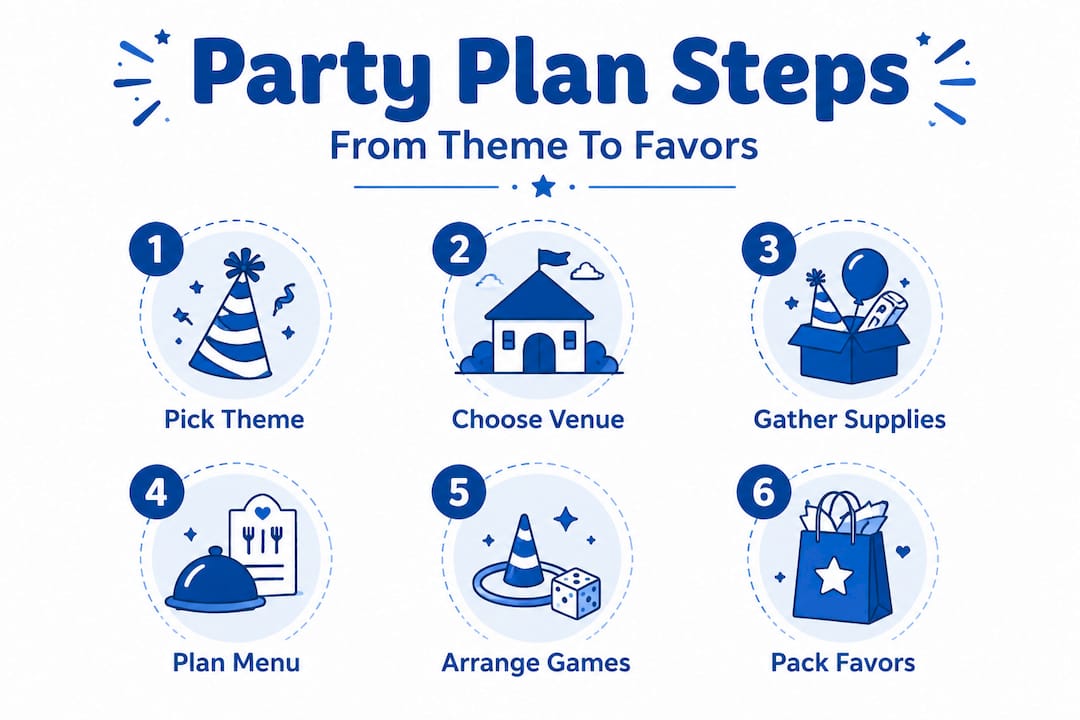
Venue: At home vs. renting a space
How to plan a children’s birthday party notes that venues offer real amenities but come with higher costs and booking limitations, while hosting at home gives you full control at a lower price. Here is a side-by-side comparison to help you decide:
| Factor | Renting a venue | Hosting at home |
|---|---|---|
| Cost | Higher, often $150 to $500+ | Lower, mostly supplies |
| Cleanup | Usually handled by venue | Your responsibility |
| Flexibility | Limited to venue rules | Full creative control |
| Setup time | Shorter on the day | Requires early setup |
| Guest capacity | Easier to scale up | Limited by home size |
| Weather risk | Minimal (indoor spaces) | Real risk for outdoor parties |
Sanity-saving setup strategies
Whether you choose a venue or your living room, setup always takes longer than expected. Lay out decorations, tableware, and activity stations the night before when possible. Party planning tips from experienced organizers consistently point to early setup as one of the highest-impact moves a parent can make.
Assign specific roles to helpers before the event. One adult can manage the food table, another supervises games, and a third handles the door and gift collection. When kids see a calm, organized adult presence, the energy stays positive. For parties with toddlers, having at least a 1:4 adult-to-child ratio keeps things from spiraling into chaos.
Bullet checklist for early planning:
- Confirm the birthday child’s theme preference
- Book venue or prepare home at least 4 to 6 weeks out
- Send invitations 3 weeks before the party
- Create a helpers list with specific duties
- Draft a loose timeline for the event day
Pro Tip: Write quick notes after the party about what worked and what you would change. This post-party debrief is surprisingly valuable when you start planning next year’s celebration.
Party supplies and decorations: Gathering essentials
With your theme and venue decided, it’s time to assemble the decorations and supplies that bring the party to life.
The essential supplies list
Decorations set the emotional tone the moment guests walk in. A well-dressed party space signals celebration before a single song is sung. Build your supply list around these core categories:
- Balloons: Clusters at the entrance, balloon arches, or simple bouquets instantly transform any space. Fun birthday balloons in a theme-matching color work for almost every party style.
- Tableware: Plates, cups, napkins, and tablecloths should match the color palette. Coordinated tableware photographs beautifully and makes the table feel intentional.
- Candles: A classic birthday candle for boys or a set of pick-style candles for girls adds a festive finishing touch to the cake moment.
- Banners and signage: A “Happy Birthday” banner above the gift table or dessert station anchors the decor.
- Centerpieces: Balloons doubled as centerpieces save money. Options like balloons and stars decor give tables a polished, festive look without extra effort.
Matching decor to your theme and venue
Outdoor parties in summer call for weather-resistant items, bright colors, and lightweight decorations that won’t blow away. Indoor venues benefit from layered decor: tablecloths at the base layer, centerpieces in the middle, and hanging decor at eye level or above. The goal is visual interest across multiple heights.
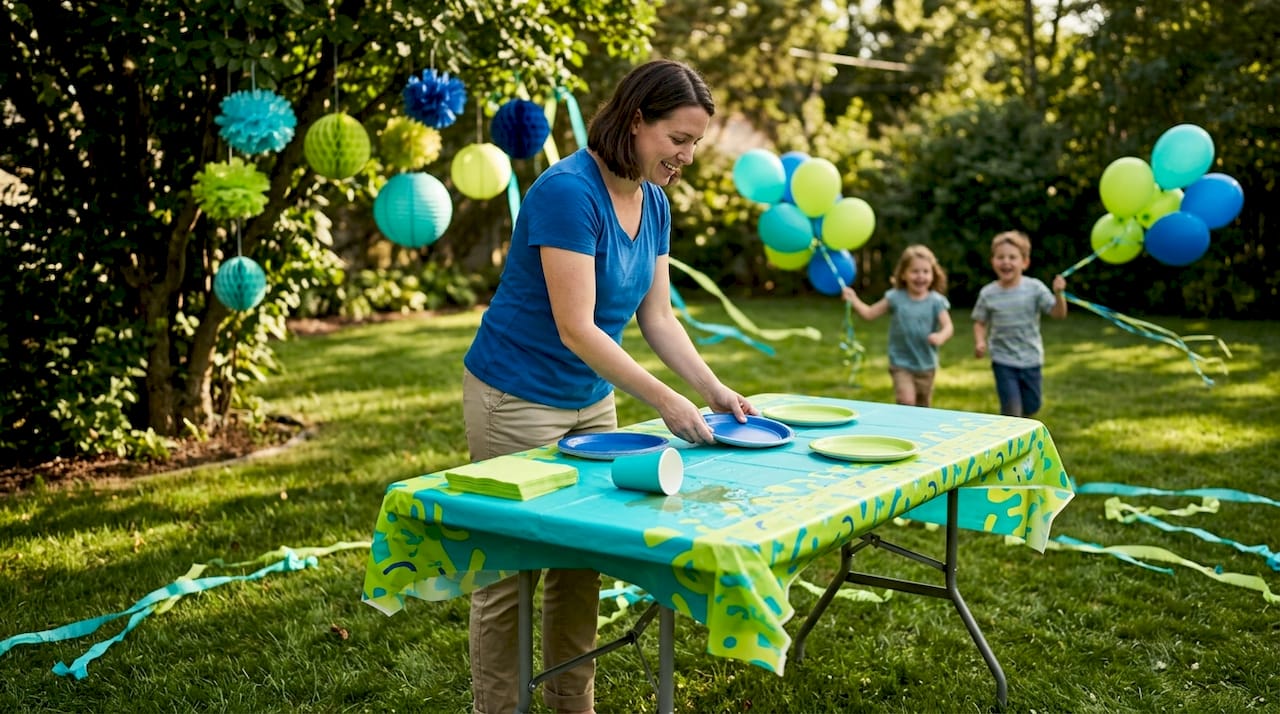
For themed parties, color is your most powerful tool. A dinosaur party works beautifully in deep greens, earthy browns, and pops of orange. A unicorn party comes alive with pastels and metallic accents. If you want to extend the theme to what kids wear or carry, themed party attire ideas can inspire fun dress codes that make the whole event more immersive.
A quick reference for supply quantities
| Supply item | Recommended quantity |
|---|---|
| Plates | 2 per guest (one for main, one for cake) |
| Napkins | 4 to 6 per guest |
| Cups | 2 to 3 per guest |
| Balloons | 10 to 15 minimum for decor impact |
| Candles | One pack matching child’s age |
Pro Tip: Always overestimate on napkins, cups, and drinks. Kids are messy, spills happen, and running out of napkins mid-party is a headache you don’t need.
Sourcing supplies from a single reliable retailer rather than three different stores saves time and often qualifies you for shipping deals. When you are ordering multiple items, consolidating your cart is a smart move.
Menu planning: Kid-friendly and allergy-safe foods
Once your decor and supplies are in place, the next crucial step is crafting a menu that delights and keeps all kids safe.
Step-by-step food planning
- Collect allergy information first. Before finalizing a single menu item, ask parents about food allergies and dietary restrictions when you send invitations. Common concerns include peanuts, tree nuts, dairy, gluten, and eggs.
- Build around finger foods. Kids eat better when they can grab and go. According to party planning experts, finger foods like pizza, mini sandwiches, fruit skewers, cheese and crackers, and popcorn consistently disappear fastest at kids’ parties.
- Tie at least one item to the theme. Dino nuggets for a dinosaur party, star-shaped sandwiches for a space theme, or fruit skewers with themed picks add a fun detail kids notice and love.
- Serve savory before sweet. Start with the main food items and save the cake and sweets for later. Kids who fill up on sugar first tend to crash before the party ends.
- Balance the spread. Offer at least one or two genuinely healthy options, like sliced fruit or vegetable sticks with dip. Parents appreciate the balance and kids often reach for familiar produce alongside the treats.
- Overbuy ice, juice boxes, and water. Drinks and ice run out faster than almost anything else at a party. Buy more than you think you need.
Popular menu ideas by age group:
- Toddlers (2 to 4): Simple finger sandwiches, cheese cubes, grapes cut in half, animal crackers, juice boxes
- Elementary age (5 to 10): Pizza slices, mini hot dogs, fruit skewers, chips and dip, lemonade, birthday cake
- Tweens (10 to 12): Taco bar, loaded nachos, smoothie station, brownies, sparkling lemonade
Quick stat: Food allergies affect roughly 1 in 13 children in the United States, meaning nearly every party with 10 or more kids is likely to include at least one child with a dietary restriction. Labeling every dish clearly is not just considerate, it is essential.
Keeping the menu manageable is just as important as making it fun. A shorter menu executed well beats an ambitious spread that leaves the host exhausted and frazzled before the cake even appears.
Games, activities, and favors: Keeping kids entertained
Once the menu is set, arranging engaging games and memorable favors is the next piece for a successful celebration.
Age-appropriate games and activities
The biggest mistake parents make with party activities is planning too many of them. A two-hour party for young children really only needs three or four structured activities, with time for free play built in between. Over-programming kills the natural energy and joy that kids bring on their own.
Great activity options by age:
- Ages 3 to 5: Musical chairs, freeze dance, a simple craft (decorating a party hat or coloring sheet), bubbles station
- Ages 6 to 9: Scavenger hunt, pin the tail on the donkey (theme-adapted), obstacle course, relay races
- Ages 10 and up: Trivia games tied to the theme, DIY friendship bracelet station, karaoke, team sports
“The goal of a party schedule is to create structure without rigidity. Leave gaps for kids to play freely, because those unscripted moments are often the ones they remember most.” — Seasoned party planning wisdom
How to plan a children’s birthday party reinforces that having adult helpers on hand to run activities keeps things moving without putting all the pressure on the hosting parent.
Party favors that extend the fun
Favors do not need to be expensive to be memorable. The most appreciated favors are ones that connect back to the party theme and feel genuinely useful or fun rather than just filler.
- Small bags of themed candy or stickers
- A single quality item, like a small toy or book, rather than a bag of cheap trinkets
- DIY craft results the child made during the party
- Balloons as favors, such as birthday balloon favors, which double as both decor and a take-home gift kids love
- Foil balloons with a theme, like the cake-themed party favor, make a big impression for their price
Pro Tip: Pack and label favor bags before the party. Assembling them mid-event while managing twelve energized children is a recipe for forgetting items or mismatching bags.
What most guides miss about birthday parties: Balancing fun and parent sanity
Here is something most party planning guides skip entirely: the parent’s experience matters as much as the child’s. A frazzled, exhausted host radiates stress, and kids pick up on that energy immediately. A parent who is calm, present, and actually enjoying the moment creates a better atmosphere than any decoration ever could.
We see this pattern consistently. Parents spend weeks perfecting every detail of a party, and by the time the guests arrive, they are too burned out to enjoy it. The child notices that their parent seems stressed and sometimes even feels guilty about it. That is the opposite of what anyone wants.
The fix is setting limits on party complexity from the very start. Decide on a theme, a budget, and a maximum number of guests before you start planning, and protect those limits firmly. A smaller, well-executed party with a relaxed host is infinitely more fun than an elaborate one with a stressed-out organizer.
Early setup is not just a logistical tip. It is a mental health strategy. When you walk into the party space an hour before guests arrive and everything is already in place, you shift from reactive to present. That shift changes everything about how the day feels.
The same logic applies to perfection chasing. No birthday party goes exactly as planned. Something will run late, a game will flop, or the cake will lean. Memorable parties are not flawless ones. They are the ones where the adults stayed loose, laughed at the unexpected moments, and kept the focus on the birthday child. Check out expert party insights for more perspective on keeping the joy front and center.
Find party supplies and inspiration for your next birthday
With your theme, menu, activities, and favors planned, the final step is sourcing everything in one place so you can stop juggling browser tabs and actually look forward to the event.
At US Novelty, we have been helping families celebrate since 1922, and we carry everything from birthday smiley balloons to full themed tableware sets. Whether you need birthday balloons and stars for a magical centerpiece or a full cart of supplies for a crowd, you will find it all at US Novelty’s party supplies store. Orders over $75 ship free, so stocking up for a complete party setup is both convenient and cost-effective. Let us help take one more thing off your planning list.
Frequently asked questions
How early should I start planning a birthday party?
Start planning 4 to 6 weeks in advance to give yourself enough time to book venues and supplies without last-minute stress. Popular venues and certain specialty items can sell out quickly, especially during peak birthday season.
What are the most budget-friendly party supplies?
Bulk-purchased tableware, simple balloon packs, and reusable decorations offer the best value per dollar. Focusing your budget on two or three standout decor pieces rather than spreading thin across many items also creates a bigger visual impact for less money.
How do I handle food allergies at a kids’ party?
Ask parents for allergy details when you send invitations, and clearly label every dish at the table. Allergy-safe party food planning means offering at least one clearly nut-free, dairy-free, or gluten-free option so every child can participate safely.
How many activities should I plan for a two-hour party?
Three to four structured activities with some free play built in between works well for most kids’ parties. Overpacking the schedule leads to rushed transitions and cranky kids, so leave intentional breathing room between games.